Buying in season is not enough
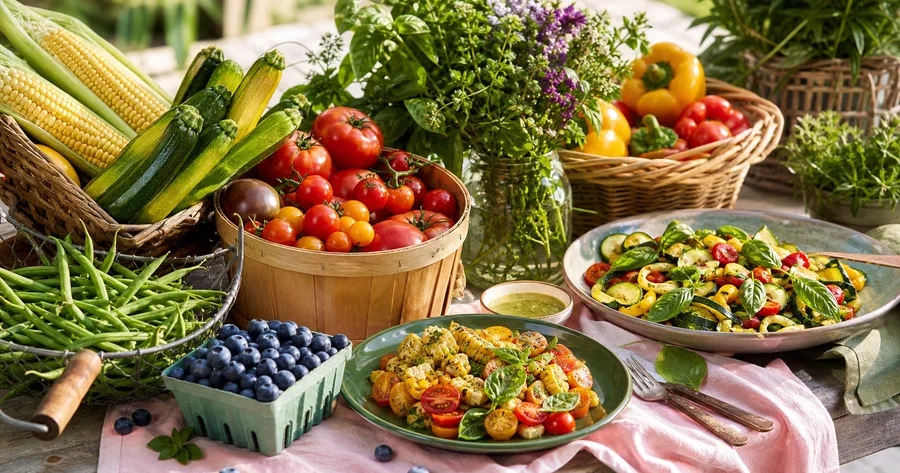
Late-summer displays make everything tempting: corn, tomatoes, zucchini, peppers, beans, blueberries and herbs. To keep that abundance economical, every purchase needs a quick destination and a backup destination.
A ripe tomato goes into tonight's salad; if it waits, it becomes sauce or soup. Zucchini works in a stir-fry, then gets grated into fritters. Blueberries top yogurt, and the surplus goes straight to the freezer.
Build the menu by useful life
Group produce by what it can become:
- Eat raw quickly: lettuce, cucumber, very ripe tomatoes and berries.
- Cook this week: corn, zucchini, peppers and beans.
- Keep longer: cabbage, carrots, apples, onions and squash.
- Transform: tomatoes into sauce, herbs into pesto, fruit into compote.
This classification naturally creates the order of meals. Salads come early in the week; soups, curries and baked dishes can wait.
Choose one simple transformation
There is no need to spend a full day preserving food. Choose one 20-minute transformation: roast a tray of vegetables, blend pesto, cook a compote or freeze fruit on a tray. You extend the harvest without turning the kitchen into a project.
The best way to enjoy the season is to plan what happens to less-than-perfect produce.
Let recipes accept substitutions
A bowl, omelette, soup, homemade pizza or pasta dish can accept many vegetables. Use the recipe as a method rather than a rigid list. If peppers are expensive but zucchini is abundant, make the swap.
Karro helps select meals around available prices and combines shared ingredients. By planning two recipes around corn or tomatoes, you buy a realistic amount and use the basket more effectively.
End with a harvest meal
Keep one flexible meal for the small amounts left over: frittata, soup, fried rice or roasted vegetables with sauce. It absorbs half vegetables and herbs before they are forgotten. The season then becomes a practical advantage, not only a good intention at the market.